Technical Debt
Technical debt creates a major competitive threat for incumbent market leaders by inhibiting innovation, delaying product launches, increasing operational costs, and exposing the business to security and compliance risks. [1] [2] [3] [4] As newer entrants with cleaner, more agile technology stacks adapt faster, incumbents burdened with technical debt risk losing both market share and relevance.
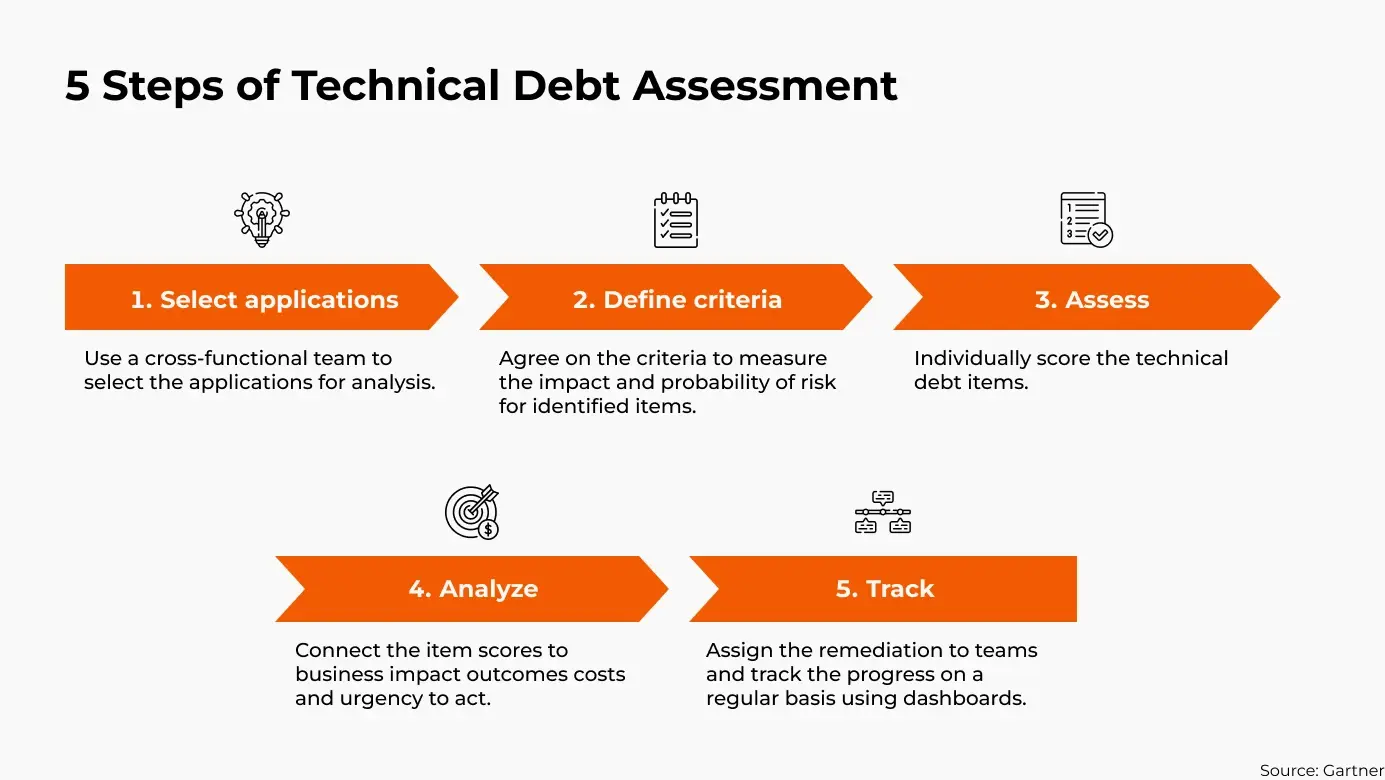
How Technical Debt Becomes a Competitive Threat:
Slows Innovation: Technical debt accumulates from short-term technical decisions, patchwork solutions, and legacy systems, making it slow and expensive to add new features or adopt emerging technologies. This limits the ability to respond quickly to market demands and new opportunities, ceding first-mover advantage to more agile competitors. [1] [3] [4]
Increases Opportunity Cost: The time and resources required to maintain legacy systems prevent investment in strategic initiatives. For example, if a competitor can integrate a new payment solution in weeks while an incumbent takes months, the latter loses "early adopter" share and opportunity revenue. [2]
Adds Business Risk: Outdated infrastructure increases the risk of security breaches, compliance failures, and scalability bottlenecks. These risks erode client confidence and can drive customers to competing offerings. [2] [5]
Undermines Transformation: Technical debt acts as a drag on digital modernization, like an anchor that holds back transformation efforts. Companies with high debt are much more likely to have incomplete or failed IT projects—stalling modernization efforts even further. [4]
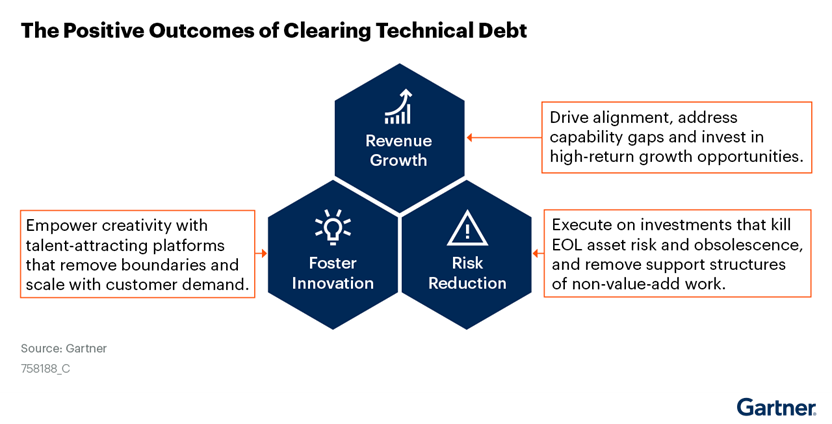
Examples of Organizations Avoiding or Resolving Technical Debt:
| Organization | Technical Debt Actions | Outcome/Context |
| Amazon | Invested in automating infrastructure, aggressively refactored code, and replatformed key systems over time. | Maintained rapid product innovation and scalability, remaining a top industry disruptor. |
| Netflix | Migrated from on-premises legacy systems to modern cloud-based infrastructure (AWS), replacing brittle codebases with modular architectures. | Achieved speed, resilience, and global scalability, outpacing legacy media firms. |
| Stripe | Prioritized minimal technical debt and modern infrastructure, enabling swift integration of new features (e.g., Apple Pay integration in 6 weeks vs. 9 months for some competing firms). [2] | Won early-adopter market share over slower-moving payment competitors. |
| Microsoft (post-2014) | Under Satya Nadella, invested heavily in cloud transformation and rearchitecting legacy systems and development workflows. | Revitalized its competitive positioning in cloud and productivity. |
A number of traditional banks and telecoms have also dug themselves out by systematic modernization, but those that failed to prioritize technical debt (e.g., some legacy telecoms, older SaaS firms) have found their digital transformation efforts stalled, leading to loss of market relevance. [4]

In every case, successful organizations treated technical debt as a strategic business threat, not merely a technical problem, aligning executive priorities and resources to address it. [1] [3] [5] [4] Those that failed to manage it often experienced lagging growth, lost market share, and reduced profitability as direct results of accumulated technical debt.
Citations
Sources
- [1]The Hidden Cost of Tech Debt: Strategies for Business Leadersthecoderegistry.comPublished: 2024-08-09
- [2]How to Sell Tech Debt Reduction Pitch to Your CEO - CTO Magazinectomagazine.comPublished: 2025-05-15
- [3]
- [4]
- [5]