
Predictive Maintenance Models
Physical AI Building Management Systems Building Energy Management Systems Integrated Electrical and Mechanical Systems
Defining and Describing Predictive-Maintenance Models
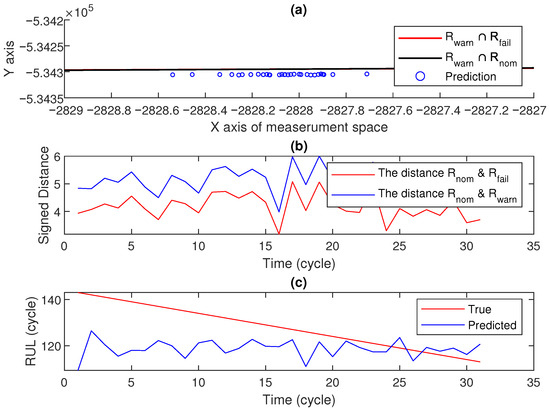
Predictive-maintenance models turn machine data into an early warning about failure, allowing maintenance to happen before a breakdown.
Predictive-maintenance models analyze sensor signals, operating conditions, maintenance records, and historical failure data to detect degradation, classify faults, estimate remaining useful life (RUL), or forecast failure probability. [1] [2] They apply when equipment is instrumented and failure patterns can be observed over time; their purpose is to replace fixed schedules or emergency repairs with condition-informed intervention. [1] [3] Typical methods include statistical models, classical machine learning, deep learning, anomaly detection, and hybrid physics-plus-data approaches. [2] [4] [5]
flowchart LR
A["Sensor data"] --> B["Data preparation"]
B --> C["Health indicators"]
C --> D["Anomaly detection"]
C --> E["Fault classification"]
C --> F["Remaining useful life"]
D --> G["Maintenance decision"]
E --> G
F --> G
G --> H["Work order"]
H --> I["Maintenance outcome"]
I --> B
Uses in Context
In Industrial Operations, “predictive maintenance” describes monitoring machine condition and scheduling repairs before a costly breakdown. [2] [6]
In manufacturing, models estimate remaining useful life, meaning the expected operating duration between the present condition and functional failure. [1] [7]
In condition monitoring, anomaly-detection systems identify deviations from normal behavior using signals such as vibration, temperature, sound, current, pressure, and velocity. [8] [9]
In maintenance software, model outputs can be connected to computerized maintenance-management systems so alerts become prioritized work orders. [10]
In aerospace and fleet settings, predictive-maintenance models combine sensor data, physics-based methods, and machine learning to anticipate failures in engines, bearings, vehicles, and other assets. [11] [5]
In discussions of digital twins, predictive maintenance refers to using a digital representation or “digital shadow” of equipment to track degradation and forecast intervention needs. [12]
History of Use
Origins
Predictive maintenance developed from condition-based maintenance, whose central idea is to determine equipment condition and use degradation from normal behavior to decide when maintenance is needed. [12]
The modern research vocabulary became strongly associated with prognostics and health management, especially the prediction of RUL: the number of cycles or operating units remaining before a component becomes nonfunctional. [1]
National Aeronautics and Space Administration and university-linked maintenance datasets helped establish a common experimental basis for the field, including the NASA C-MAPSS turbofan degradation dataset and bearing datasets used to test failure prediction and RUL algorithms. [2] [12]
The innovation was therefore distributed across reliability engineering, academic prognostics research, industrial sensor systems, and open research datasets rather than originating with a single technology company. [2] [12] [5]
Evolution
1990s–2000s — Condition monitoring to prognostics: Maintenance research expanded from detecting abnormal condition to estimating degradation trajectories and RUL, enabling intervention before failure rather than merely diagnosing a fault after it appeared. [1] [12]
2010s — Machine learning and benchmark datasets: Supervised learning, anomaly detection, and recurrent neural networks were increasingly applied to sensor time series, while NASA and bearing datasets made comparisons between methods easier. [2] [4]
2020s — Hybrid, connected, and operational systems: Current systems combine IoT sensors, deep learning, physics-based reasoning, digital twins, edge or cloud deployment, and CMMS integration; major unresolved issues include preprocessing, alert thresholds, data quality, and cross-domain generalization. [2] [9] [10]
Best Real-World Examples
NASA C-MAPSS turbofan dataset — a benchmark for estimating aircraft-engine degradation and RUL. [2] [11]
NASA bearing dataset — used to predict bearing degradation and failure dates with methods including autoencoders. [12] [5]
CWRU bearing data — a widely used benchmark for bearing fault classification and predictive-maintenance research. [2]
SAPPHOS — a vehicle and fleet-maintenance initiative combining physics-based techniques, classical AI, machine learning, and numerical methods. [5]
i40pilot predictive-maintenance system — a documented industrial workflow using historical maintenance logs with gradient-boosted and LSTM models. [6]
InTechHouse predictive-maintenance deployment — an example of unsupervised anomaly detection connected to a client’s CMMS and validated with temporal splits. [10]
AI-driven rotating-equipment platform — a production deployment using SCADA integration, autoencoders, and gradient boosting. [13]
Case Studies
NASA’s turbofan and bearing datasets became influential testbeds because they provide degradation trajectories that can be used to evaluate whether a model detects deterioration and estimates RUL before failure. [2] [12] [11] Researchers have applied preprocessing, normalization, time-series segmentation, regression, recurrent networks, autoencoders, and hybrid approaches to these datasets. [4] [11] [5] The case demonstrates that predictive-maintenance research depends not only on model architecture but also on standardized data, meaningful health indicators, and evaluation against the timing of failure. [2] [4]
In one documented manufacturing-oriented deployment, i40pilot combined a historical operating baseline with two years of maintenance records and trained gradient-boosted and LSTM-based models to detect early degradation. [6] The example illustrates the move from laboratory prediction to operational decision support: the model is valuable only when its alerts can be interpreted, validated against maintenance history, and translated into an intervention before failure. [6]
A separate implementation described by InTechHouse trained an unsupervised anomaly-detection model on eighteen months of vibration and temperature data, used a temporal train–test split to avoid leaking future information into evaluation, and tuned alert thresholds with maintenance personnel. [10] The resulting daily scoring pipeline sent flagged assets to the client’s CMMS as prioritized work orders. [10] This case shows that deployment architecture, threshold design, human expertise, and workflow integration are as important as predictive accuracy; it also highlights the operational risk of alert fatigue and false positives. [10]
Sources
Sources
- [1]Remaining Useful Life (RUL) Prediction Methods for Machine ...onlinelibrary.wiley.com
- [2]ARTIFICIAL INTELLIGENCE AND ROBOTICS IN PREDICTIVE ...frontiersin.org
- [3]Remaining Useful Life (RUL) Prediction Methods for Machine Health ...onlinelibrary.wiley.com
- [4]
- [5]
- [6]
- [7]Predictive maintenance in industrial systems: an XGBoost ...tandfonline.com
- [8]
- [9]
- [10]
- [11]
- [12]
- [13]AI-Driven Predictive Maintenance for Rotating Equipmentinfinitytechnologies.pro